CRISPR Cas9 – OI Research in BOS Labs
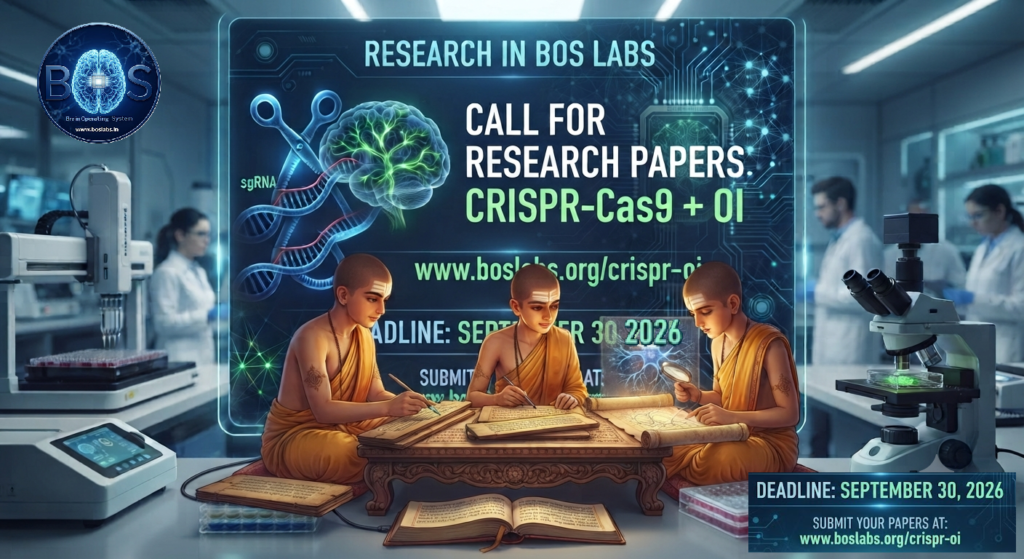
BOS Labs invites research paper on CRISPR Cas9 + OI last date for submitting papers Sept 30 2026
Bridging Genomes and Bio-Computation: The Convergence of CRISPR-Cas9 and Organoid Intelligence (OI)
Published by BOS Labs
Submission Portal: www.boslabs.org/crispr-oi
Deadline for Paper Submissions: September 30, 2026
1. Introduction: A New Paradigm in Biotechnology
The rapid convergence of molecular genetics and bio-digital computing has opened unprecedented avenues for biomedical research. At the forefront of this revolution is the integration of CRISPR-Cas9 genome engineering with Organoid Intelligence (OI).
While CRISPR-Cas9 provides the precise molecular tools to edit and manipulate the building blocks of life, Organoid Intelligence utilizes three-dimensional, lab-grown human brain tissue cultures to study neural computation, learning, and plasticity. By bridging these domains, researchers can construct sophisticated human tissue models that not only mimic complex genetic disorders but also act as biological processing substrates.
2. Technical Scope: CRISPR-Cas9 Meets Organoid Intelligence
The Core Technologies
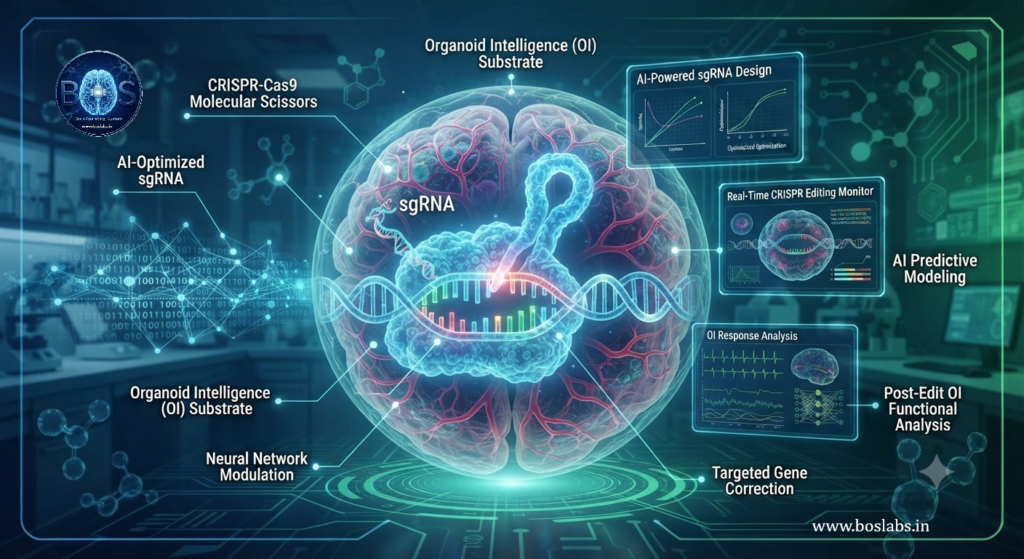
- CRISPR-Cas9 Editing Engine: Comprising a Cas9 endonuclease paired with a targeted guide RNA (gRNA), this system enables precise double-stranded DNA breaks, knockouts, or base modifications within stem cells prior to or during 3D differentiation.
- Organoid Intelligence (OI) Substrates: Human induced pluripotent stem cells (hiPSCs) are cultured into 3D cerebral organoids, developing self-organized neural networks equipped with functional synapses and neuro-circuitry.
Methodological Workflow
- Precision Genome Engineering: Researchers use CRISPR-Cas9 tools on human pluripotent stem cells to introduce targeted genetic mutations or insert fluorescent tracking markers.
- 3D Differentiation: Edited cell lines are driven to self-organize into complex brain organoids, mimicking specific developmental stages or neurodegenerative disease phenotypes.
- Bio-Digital Interfacing: Organoids are coupled with microelectrode arrays (MEAs) to deliver controlled electrical inputs, monitor real-time electrophysiological outputs, and analyze altered functional connectivity.
3. Key Applications in Research
- Neurological Disease Modeling: Utilizing CRISPR-Cas9 to replicate genetic risk factors (e.g., related to Alzheimer’s or neurodevelopmental disorders) within cerebral organoids to study pathogenesis in real time.
- Therapeutic Screening: Evaluating the functional rescue effects of gene edits or novel chemical compounds directly on patient-derived neural tissues.
- Biocomputing and Plasticity Assays: Exploring how genetically modified biological neural networks process information, adapt to electrical stimulation, and demonstrate basic learning capabilities.
4. Future Challenges and Bottlenecks
Despite its immense promise, the CRISPR-Cas9 + OI research landscape faces substantial hurdles that prospective papers submitted to BOS Labs must address:
- Off-Target Genetic Alterations: Managing unintended genomic cleavage or low editing efficiencies in complex 3D multi-cellular structures.
- Scalability and Vascularization: Maintaining long-term viability, nutrient delivery, and waste removal in large, highly complex neural organoids lacking natural blood vessel networks.
- Interface Fidelity: Achieving high-density, stable, bi-directional signal transmission between physical microelectrodes and sensitive biological neural tissues without inducing local trauma.
- Ethical and Regulatory Boundaries: Navigating the profound biological, security, and ethical implications associated with engineering cognitive complexity and biological computing substrates.
5. Call for Submissions
BOS Labs invites researchers, bioengineers, and computational neuroscientists to submit original research papers detailing novel breakthroughs, methodologies, and analytical models at the intersection of CRISPR-Cas9 and OI.
- Submission Deadline: September 30, 2026
- Where to Submit:www.boslabs.org/crispr-oi